Mobility & Accessibility Sales Opportunities for Independent Sales Roles
You’re not just selling. You’re solving.
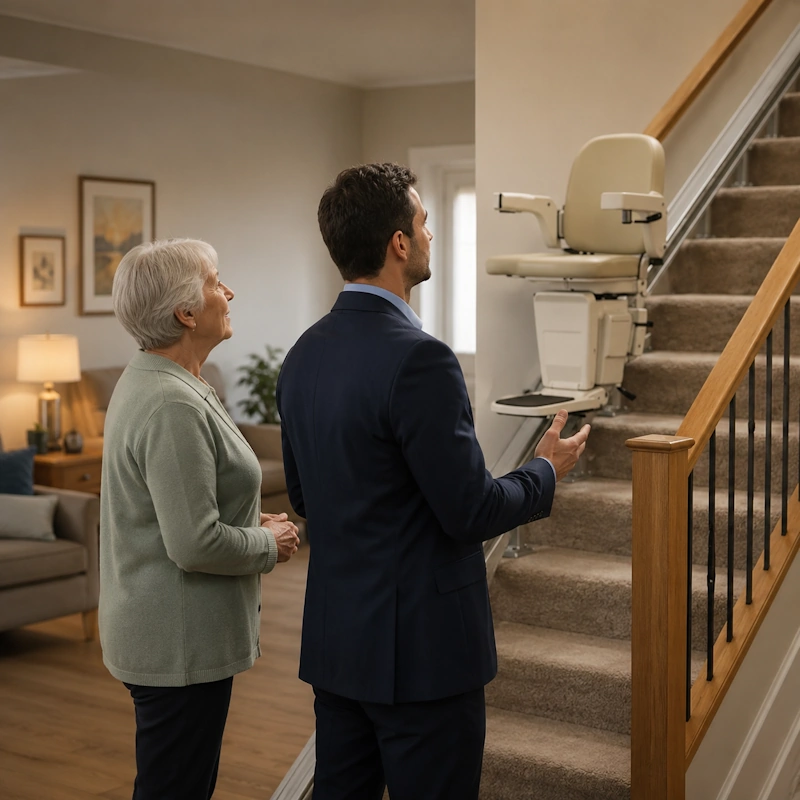
This page brings together opportunities within the mobility and accessibility sector, including roles focused on products and services designed to support independent living. These may include solutions such as stairlifts, mobility aids, home adaptations, and other products that improve accessibility for individuals with reduced mobility.
Opportunities in this category are often aimed at the growing senior market, as well as individuals with specific mobility needs.
As a result, they are well suited to professional agents who are comfortable working in a consultative manner, understanding customer requirements, and helping clients find practical, life-improving solutions.
Demand in this sector is driven by demographic trends and an increasing focus on enabling people to live independently for longer.
Latest Opportunities in Mobility & Accessibility Solutions

Job Summary: Homelife Stairlifts UK is seeking dedicated and motivated Field Sales Surveyors nationwide to join our growing team on…

‘ If you’re willing to travel to complete 2-3 appointments a day you can earn £100k – £150k p/a’ We’re…

Halton Stairlifts is a UK-based, family-run company supplying and installing stairlifts in homes nationwide. As an independent and fast-growing business,…
What Mobility & Accessibility Sales Agents Sell
Mobility and accessibility suppliers offer a wide range of products designed to improve independence, safety and quality of life. Depending on the manufacturer or distributor they represent, sales agents may be responsible for promoting individual products, complete home mobility solutions or ongoing support services.
Common product categories include:
- Stairlifts for homes with multiple floors.
- Mobility scooters for outdoor independence.
- Manual wheelchairs and powered powerchairs.
- Walking aids and rollators to improve everyday mobility.
- Riser recliners and adjustable beds that provide greater comfort and support.
- Patient hoists and transfer equipment for carers and healthcare environments.
- Adapted bathrooms, access ramps and home lifts that improve accessibility throughout the home.
Some companies also generate recurring revenue through installation, servicing, repairs and aftercare, creating potential opportunities for sales agents to develop long-term customer relationships and increase account value.
About the Mobility & Accessibility Market in the UK
The UK mobility and accessibility market is growing steadily, driven primarily by demographic shifts. The population is ageing, with more people living longer and wanting to maintain independence in their own homes. This creates ongoing demand for products such as mobility aids, stairlifts, adapted bathrooms, and home accessibility solutions. Unlike many consumer markets, this demand is not cyclical. It is structural and expected to increase year after year.
At the same time, there is a strong societal and political push toward independent living. Both individuals and public bodies are focused on helping people stay in their homes for as long as possible, rather than moving into care facilities. This has led to increased funding, grants, and support schemes from local authorities and the NHS, which in turn fuels demand for accessibility products and services across the country.
Technology is also playing a role in expanding the market. Modern mobility solutions are no longer purely functional. They are becoming more advanced, more user-friendly, and often more discreet in design. This shift is helping remove some of the stigma previously associated with mobility products, opening the market to a wider audience, including younger users with temporary or long-term mobility needs.
Importantly, this is a market with multiple layers. While direct consumer demand is significant, there is also strong activity across housing associations, developers, occupational therapists, and public sector organisations. This creates a diverse and resilient ecosystem where demand is coming from several directions at once, making it less vulnerable to sudden downturns.
Being a Sales Agent in the Mobility & Accessibility Market
One of the biggest advantages of working in this sector is the stability of demand. This is not a trend-driven or highly volatile market. The need for mobility and accessibility solutions is constant and growing, which means sales agents are operating in an environment where opportunities continue to appear over time rather than disappear.
The nature of the products also makes the market less price-sensitive than many others. For end users, these purchases are often essential rather than optional. When someone needs a stairlift, a wheelchair, or an adapted bathroom, the focus is typically on quality, reliability, and trust rather than simply finding the lowest price. This creates strong conditions for consultative selling, where knowledgeable agents who can guide customers through the decision-making process are highly valued.
There is also a wide range of routes to market. Many opportunities involve direct B2C sales, where agents work closely with individuals and families. Sales agents will generally receive pre-qualified leads and appointments from the company. It is very rare for companies in the B2C mobility market to expect agents to carry out any cold calling.
At the same time, there are strong B2B channels, including partnerships with housing associations, care providers, local authorities, property developers, and healthcare professionals. This variety allows agents to play to their strengths, whether they prefer face-to-face consumer sales or building longer-term commercial relationships.
Finally, the combination of strong demand, meaningful products, and multiple sales channels creates solid long-term earning potential. Agents are not just selling products. They are helping people maintain independence and improve quality of life. That tends to lead to higher engagement, better conversion rates, and more sustainable income over time compared to more transactional markets.
Why Mobility & Independent Living Is a Strong Market for Sales Agents
The UK’s mobility and independent living sector is experiencing sustained growth, driven by an ageing population, longer life expectancy and increasing demand for solutions that help people remain safe and independent in their own homes. Unlike many industries, demand is driven by long-term demographic trends rather than changing consumer fashions, making it one of the more stable markets for sales agents. As more families invest in products that improve quality of life, manufacturers and suppliers continue to expand their sales networks across the UK.
Opportunities exist across a broad range of products, including mobility scooters, stairlifts, wheelchairs, walking aids, adjustable beds and other mobility equipment, as well as larger home adaptations that enable people to remain independent for longer.
These solutions require a consultative sales approach rather than hard selling. Customers often need advice, home assessments and product demonstrations before deciding which option best suits their needs. Sales agents who can build trust, explain product benefits clearly and provide excellent customer service are well positioned to succeed in this market.
Be the First to Know About New Opportunities in the Mobility Market
You can bookmark this page and visit it regularly, but an even better option is to register as a member of Salesagents.uk.
As a member, your profile is more likely to be noticed by our team as soon as relevant opportunities become available. This gives you an extra pair of eyes and ears looking out for suitable opportunities. You can also choose to make your profile visible directly to companies registered on Salesagents.uk.
Membership is not free, but it is very affordable. You can choose between a monthly membership or a lifetime membership.
Find Sales Agents for your company
Contact us and include some information about the products you want agents to sell. We have many agents with experience in the mobility market in our network. One of our account managers will get back to you with information and a suggestion shortly thereafter.
FAQs about sales agents in the mobility market
Many mobility products are tailored to an individual’s home, health requirements and mobility level, so a home assessment is often an important part of the sales process. Products such as stairlifts, home lifts, bathroom adaptations and access ramps usually need to be measured and assessed before installation.
For sales agents, home assessments provide an opportunity to understand the customer’s needs, demonstrate suitable solutions and build trust with both the customer and their family. In many cases, recommendations may also involve occupational therapists or other healthcare professionals to ensure the chosen solution is appropriate.
The sales cycle varies depending on the product. Walking aids and smaller mobility products may be purchased relatively quickly, while stairlifts, home lifts and major home adaptations can involve multiple conversations, home assessments, quotations and family discussions before a decision is made.
However, sales agents will generally be working with pre-qualified appointments, so the prospect has already recognised the need for mobility equipment. When an agent presents a suitable solution that clearly benefits the customer, even larger sales can often be completed relatively quickly.
While older adults make up a significant proportion of customers, demand also comes from people recovering from injury, individuals living with long-term disabilities, those with progressive health conditions and families adapting homes for relatives. Care homes, supported living providers, housing associations and healthcare organisations also purchase mobility products for residents and service users.